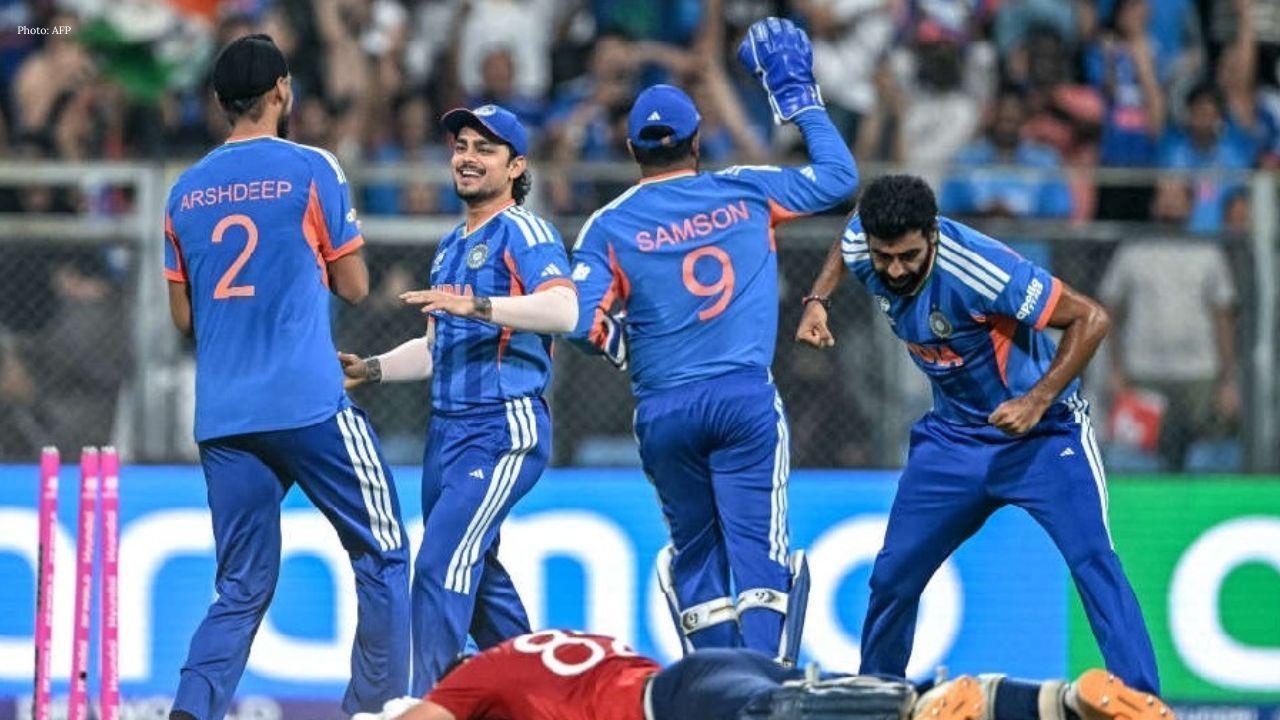
The roar of the Wankhede Stadium faithful reached a fever pitch on March 5, 2026, as India locked horns with England in a T20 World Cup semifinal that will be etched into the annals of cricket history. What unfolded was a breathtaking spectacle of power-hitting, strategic brilliance, and nerve-wracking drama, culminating in a narrow but decisive victory for the host nation. With Sanju Samson delivering a sensational, career-defining knock and the match setting a new T20 record for aggregate runs between the two cricketing giants, the contest was a fitting testament to the thrilling evolution of the shortest format.
India's triumph not only secured their coveted spot in the T20 World Cup final against New Zealand but also left fans and pundits alike buzzing about the sheer quality and intensity of the India Triumphs Over England, Books T20 World Cup Final Berth vs NZ. This wasn't just another game; it was a record-shattering, heart-stopping encounter that showcased the very best of T20 cricket, underlining why the India England semifinal was one of the most anticipated clashes of the tournament.
A Record-Breaking Encounter: India vs. England Semifinal Thriller
The stage was set for an epic showdown, and neither team disappointed. Batting first, India posted a colossal 253/7, a total that seemed insurmountable on most days. However, England, renowned for their fearless white-ball hitting, mounted a spirited chase, falling agonizingly short at 246/7 after their 20 overs. India ultimately prevailed by a mere 7 runs, clinching their place in the final in Ahmedabad.
This high-octane encounter at the iconic Wankhede Stadium shattered records, most notably becoming the highest match aggregate (499 runs) involving England & India in T20Is. Such a monumental total speaks volumes about the flat Wankhede pitch, the explosive batting talent on display, and perhaps, a degree of struggle for the bowlers. England’s Jofra Archer, usually an economical pace spearhead, endured a particularly tough outing, conceding 61 runs in his spell, marking the most runs conceded in an innings by an England bowler in Men's T20 World Cup history, surpassing Stuart Broad's previous record of 60.
The sheer volume of runs scored highlights the modern T20 philosophy: attack from ball one. Both sides demonstrated an unyielding commitment to clearing the boundaries, keeping the scoreboard ticking at an astonishing rate. For cricket enthusiasts, it was a dream come true – a relentless barrage of fours and sixes that left everyone on the edge of their seats until the very last ball.
Samson's Heroics: A Knock for the Ages
While the match was a team effort, one individual performance shone brightest, casting a long shadow over all others: Sanju Samson's incredible 89 off just 42 deliveries. His innings was a masterclass in controlled aggression, peppered with elegant drives and powerful strikes that dismantled the English bowling attack. Samson’s brilliance earned him the well-deserved 'Player Of The Match' award and a remarkable 98.22 Cricinfo MVP points, underscoring his pivotal role in India's imposing total.
Indian captain Suryakumar Yadav lauded Samson's performance, stating, "It was a special knock today. He knew what he wanted to do as soon as he went into bat… the way he batted the team required that from him." This praise from his captain highlights the importance of Samson's innings, not just for its statistical value, but for its crucial impact on the team's momentum at a critical juncture of a major semifinal.
Adding a layer of regret to England's defeat was captain Harry Brook's candid admission regarding a dropped catch. "I will hold my hands up and say I made a big mistake dropping Samson. Catches win matches, and unfortunately, it didn’t go our way in the field tonight," Brook confessed. This dropped opportunity early in Samson's innings proved incredibly costly, as the Indian batter made England pay dearly, transforming a potential early dismissal into a match-winning contribution. It’s a stark reminder that in high-stakes T20 encounters, a single lapse in fielding can shift the entire balance of the game.
Practical Tip: The Cost of Dropped Catches
For any aspiring cricketer, Brook's honest reflection serves as a crucial lesson: fielding can be as impactful as batting or bowling. In a format where margins are slim, taking every opportunity, especially against in-form batsmen, is paramount. A dropped catch doesn't just give the batsman a second life; it can demoralize the bowlers and concede valuable runs, as seen dramatically in this Brook Regrets Dropped Catch as India Defeats England in Semifinal.
The Turning Points: Missed Opportunities and Clinical Execution
Beyond Samson's individual brilliance and Brook's dropped catch, several other factors contributed to India's narrow victory in the India England semifinal. England captain Harry Brook acknowledged his team's shortcomings, admitting to "mis execution here and there." He rightly pointed out, "The Indian batters are some of the best batters in the world, and if you misexecute to them, it goes out the park." This speaks to the unforgiving nature of top-tier T20 cricket, where even slight errors in line, length, or pace are mercilessly punished.
Despite England's aggressive chase, the decisive factor in India's favour was their ability to hold their nerve with the ball, particularly in the death overs. Suryakumar Yadav singled out two bowlers for special praise: "But the way Bumrah and Singh controlled the game was unbelievable… You know how capable he is and what he has done over the years for India, and he did the same again today… it was a special bowling performance." Jasprit Bumrah and Arshdeep Singh's ability to deliver under extreme pressure, executing their plans precisely against a rampant English batting lineup, proved to be the ultimate difference. Their controlled yorkers, deceptive slower balls, and ability to pick up crucial wickets stifled England's momentum just when they seemed on the verge of turning the tide.
Analysis: Death Bowling under Pressure
In a match where nearly 500 runs were scored, the ability of Bumrah and Arshdeep to maintain composure and execute their skills was extraordinary. This highlights the importance of having specialist death bowlers who can deliver under immense pressure. Their variations, accuracy, and mental toughness were critical in defending a daunting but not impossible target.
Navigating the Pressure Cooker: Captains' Insights
The post-match reflections from both captains offered a fascinating glimpse into the intense pressures of a T20 World Cup semifinal. Harry Brook, despite the loss, showed remarkable sportsmanship, praising a young English player's "unbelievable" performance. "He will earn some serious money in his career, and he will have a hell of a career with England… to see him go out there in the manner that he did showing the world what he can do was great," Brook stated, showcasing the leadership required to both acknowledge defeat and nurture future talent.
On the Indian side, Suryakumar Yadav perfectly encapsulated the emotional rollercoaster. "It is an unbelievable feeling playing in India and leading such a wonderful side. It is a special feeling for all the boys," he beamed. However, he also confessed to the immense personal strain: "Very nervous, if someone would have checked my heart rate, it would easily be 160, 175 plus." This honest admission underscores the incredible mental fortitude required to lead a team in such high-stakes environments, even when experiencing intense internal pressure.
England coach Brendon McCullum also weighed in on the off-field controversies that have affected the team, stating, "It happens in every team… in the end, the guys put their hands up and know they made a shocking mistake and I thought it was dealt with and we moved on." His comments highlighted the constant challenge of managing team dynamics and discipline in professional sports, emphasizing the importance of support and moving forward after addressing issues.
Looking Ahead: India's Date with Destiny in the Final
With the thrilling India England semifinal now a cherished memory, India has little time to celebrate. Their focus immediately shifts to Sunday's grand finale, where they will face a formidable New Zealand side in Ahmedabad. The Kiwis, after sweeping South Africa aside last night, are in fine form and, as Suryakumar Yadav acknowledged, will "certainly fancy their chances of causing another upset in the final." A certain Finn Allen from New Zealand also poses a significant threat, known for his explosive batting at the top of the order.
The T20 World Cup final is scheduled for 7 pm local time (13:30 GMT), and promises to be an absorbing encounter. India, as reigning champions, will carry the weight of expectation, especially playing on home soil. The atmosphere in Ahmedabad is expected to be electric, with millions of fans glued to their screens worldwide. Both teams have demonstrated exceptional cricket throughout the tournament, and the final is poised to be a captivating battle of skill, strategy, and nerve.
What to Expect in the Final: India vs. New Zealand
- Batting Power vs. Strategic Brilliance: India’s explosive batting lineup against New Zealand’s tactically astute bowlers.
- Key Matchups: Rohit Sharma vs. Trent Boult, Suryakumar Yadav vs. Mitchell Santner, Jasprit Bumrah vs. Finn Allen.
- Home Advantage: The Ahmedabad crowd will be India's '12th man,' but New Zealand's experience in big finals cannot be underestimated.
- Nerves and Pressure: Both teams will face immense pressure, making mental resilience a crucial factor.
The T20 World Cup final is not just a cricket match; it's a spectacle, a culmination of months of preparation and high-octane competition. India's journey through a record-breaking semifinal has set the perfect stage for what promises to be an unforgettable championship decider.